
A successful AWS Co-Sell program is more than submitting opportunities to AWS. It requires clear business objectives, strong alignment with AWS stakeholders, effective sales enablement, and a repeatable process that helps both your organization and AWS achieve customer outcomes. AWS recommends developing a formal co-sell program with defined goals, ongoing education, and continuous measurement to maximize co-sell success.
🎯 1. Define Clear Co-Sell Business Objectives
Begin by establishing measurable business objectives that align with your AWS go-to-market strategy. AWS recommends using SMART objectives (Specific, Measurable, Achievable, Relevant, Time-bound).
Typical objectives include:
- Increase Closed Won opportunities
- Increase AWS-influenced revenue
- Increase AWS Marketplace Gross Software Sales (GSS)
- Increase the number of co-sell opportunities shared annually
Work closely with your AWS Partner Development Manager (PDM) or Partner Development Representative (PDR) when defining these objectives.
🧭 2. Align Program Goals with Business Objectives
Every project within your co-sell program should contribute toward a measurable business objective.
Examples include:
- Increase AWS field engagement
- Conduct regular account mapping sessions
- Present your solution during AWS seller meetings
- Schedule recurring opportunity reviews with AWS
AWS recommends formal enablement sessions and account mapping activities to strengthen collaboration between your sales team and AWS sellers.
🛒 3. Make AWS Marketplace Your Primary Procurement Channel
AWS Marketplace should be positioned as a strategic sales channel.
Benefits include:
- Customers can purchase using existing AWS spend commitments.
- Faster procurement cycles.
- Consolidated AWS billing.
- Higher deal close rates.
- Shorter sales cycles.
- Larger average deal sizes.
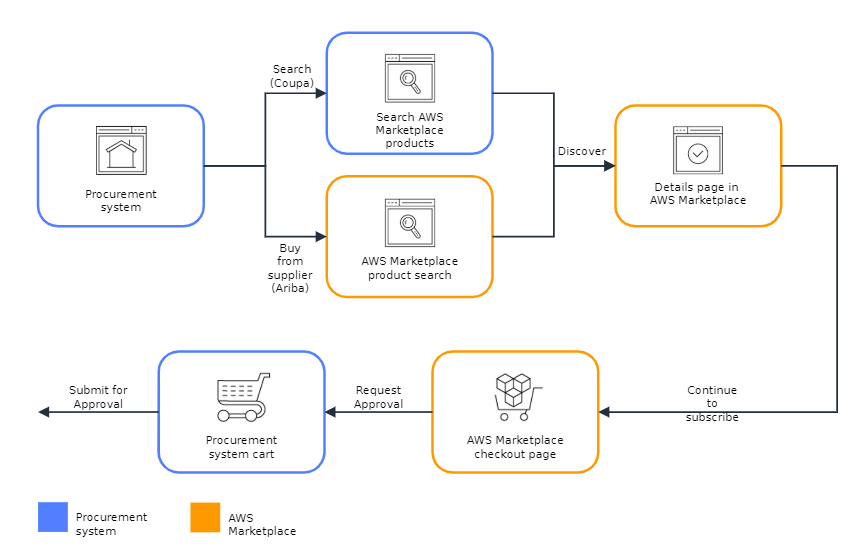
Fig. 1
Partners should develop an AWS Marketplace strategy in collaboration with their AWS PDM/PDR.
📚 4. Invest in Sales Enablement
Successful co-selling depends on educating your sales organization.
Sales teams should understand:
- AWS organizational structure
- AWS seller roles
- AWS Marketplace value proposition
- ISV Accelerate Program benefits
- Co-sell process
- Customer qualification
- Available sales assets and playbooks
AWS emphasizes that education and enablement are among the most critical investments in a successful co-sell program.
🚀 5. Follow the Educate → Enable → Engage Framework
AWS recommends a structured enablement model consisting of three stages:
🎓 Educate
- Train sales teams on AWS co-selling.
- Integrate AWS education into onboarding.
- Measure training completion.
🚀 Enable
- Provide sales playbooks.
- Create pitch decks.
- Develop call scripts.
- Share customer success stories.
- Ensure sellers understand AWS engagement best practices.
🤝 Engage
- Track AWS engagements.
- Collect feedback.
- Incorporate AWS KPIs into sales performance reviews.
Fig. 2
The framework is illustrated in the AWS Co-Sell Enablement Framework (Figure 2).
✅ 6. Submit Only Qualified Opportunities
AWS expects co-sell requests to be based on qualified customer opportunities.
Before creating an outgoing referral, ensure:
- Discovery is complete.
- Technical fit is confirmed.
- Customer budget is identified.
- Decision makers are engaged.
- AWS infrastructure is part of the solution.
- AWS Marketplace procurement is viable.
- Customer intent has been established.
AWS notes that its sales teams rarely engage on unqualified prospect opportunities.
🤝 7. Build Relationships with AWS Stakeholders
Develop relationships with key AWS personnel involved in co-selling, including:
- Account Managers (AM)
- Solutions Architects (SA)
- Cloud Sales Center Representatives (CSC)
- Demand Generation Representatives (DGR)
- ISV Sales Managers (ISM)
- Partner Sales Managers (PSM)
- Marketplace Customer Advisors (CA)
Fig. 3
These stakeholders influence partner engagement and customer opportunities. The key stakeholder roles are illustrated in Figure 3.
📊 8. Establish Internal Co-Sell KPIs
Examples of measurable KPIs include:
- AWS seller meetings completed
- Account mapping sessions conducted
- AWS enablement sessions delivered
- Outgoing referrals submitted
- Referral acceptance rate
- Marketplace transactions
- AWS Marketplace revenue
- AWS-influenced pipeline
- AWS-originated opportunities
- Win rate
- Sales cycle duration
- Expansion revenue
AWS recommends aligning internal KPIs with co-sell objectives and encouraging active engagement with AWS stakeholders.
🛠️ 9. Leverage AWS Resources
Take advantage of AWS tools and resources to streamline co-selling.
Recommended resources include:
- APN Customer Engagement (ACE)
- AWS Partner CRM Connector
- AWS ISV Co-Sell Checklist
- AWS PDM/PDR guidance
- AWS Marketplace Customer Advisors
Using these resources can reduce manual effort and improve the efficiency of managing co-sell opportunities.
🔄 10. Continuously Review and Improve
Regularly review your co-sell program with both internal teams and AWS stakeholders.
Focus on:
- Progress toward annual goals
- Co-sell process improvements
- Education and enablement effectiveness
- Must-win opportunities
- Feedback from AWS stakeholders
AWS recommends continuously iterating your program as AWS processes and customer needs evolve.
📋 Co-Sell Success Checklist
Before creating an outgoing referral:
✅ Customer has completed discovery.
✅ Decision makers are engaged.
✅ Budget has been identified.
✅ AWS services are part of the solution.
✅ AWS Marketplace procurement is planned.
✅ Customer has confirmed buying intent.
✅ Referral description clearly explains:
- Customer challenge
- Proposed solution
- Business outcome
- Expected close date
- Opportunity stage
- Assistance requested from AWS
✅ Sales team has engaged the appropriate AWS stakeholders.
✅ Referral details are accurate and complete.
✅ Opportunity updates are maintained throughout the sales cycle.
🧹 Improve opportunity hygiene
Keep your opportunity complete and current so AWS can accelerate the co-sell engagement. Enrich these fields manually or with the agent:
-
Title: Name the customer, the workload, and the delivery model so the deal is easy to identify.
-
Customer business problem: Describe this customer's specific situation, what is forcing them to act now, and the outcome they expect. Avoid generic descriptions that could apply to any customer.
-
Stage: Keep the stage accurate, and move the opportunity to Launched or Closed Lost as soon as the deal closes.
-
Next steps: Include a specific action with a deliverable, a named owner, and a concrete date, and refresh it each time the deal moves.
-
Estimated monthly recurring revenue: Base the estimate on the AWS Pricing Calculator rather than a guess.
-
Industry and use case: Select accurate values rather than leaving them as Other.
-
AWS services: List the AWS services the customer is adopting, in the description and the products field, not services your own product runs on.
- Partner solution: Tag your registered AWS solution so the deal links to a validated offering.
💡 Key Takeaways
A successful AWS Co-Sell program is built on clear objectives, sales enablement, qualified opportunities, strong AWS relationships, and continuous improvement. Organizations that treat AWS Marketplace as a strategic sales channel, invest in educating their teams, and establish repeatable co-sell processes are better positioned to increase Marketplace transactions, improve collaboration with AWS sellers, and achieve stronger business outcomes.