
When selling through AWS Marketplace, multiple types of taxes may apply depending on the transaction. These taxes are influenced by several factors, including seller location, buyer location, product type, and regional tax regulations.
This article provides a general overview of how taxation works in AWS Marketplace and what sellers should expect.
⚠️ Important: This article is for informational purposes only and does not constitute tax or legal advice. Sellers should consult their tax advisors for guidance specific to their situation.
AWS tax guidance is provided by Amazon Web Services and can change over time based on regulations.
Types of Taxes That May Apply in AWS Marketplace
There are several categories of taxes that may be relevant when selling through AWS Marketplace:
1. Indirect Taxes (VAT, GST, Sales Tax)
Indirect taxes are the most common taxes associated with Marketplace transactions.
These may include:
Value Added Tax (VAT)
Goods and Services Tax (GST)
Sales and Use Tax
Digital services taxes in certain jurisdictions
These taxes are typically determined based on the buyer’s location, not the seller’s location.
Who Collects Indirect Taxes?
In many jurisdictions, AWS acts as a marketplace facilitator, meaning AWS:
Calculates applicable taxes
Charges the buyer
Collects the tax
Remits the tax to the relevant authority
In these cases, sellers generally receive payouts net of AWS fees, without needing to collect indirect taxes themselves for those transactions.
🚀 Learn More! AWS Marketplace - Tax Help for Sellers
However, in some jurisdictions AWS may not collect taxes, and sellers may have their own obligations.
2. Seller Income Taxes
Regardless of who collects indirect taxes, sellers are generally responsible for reporting income received from AWS Marketplace in their local jurisdiction.
This may include:
Corporate income tax
Business income tax
Local income taxes
AWS does not typically withhold income taxes from seller payouts (except where legally required).
🚀 Learn More! AWS Tax information requirements
3. Withholding Taxes
For cross-border transactions, buyers may be required under local law to withhold a portion of payments and remit it to their tax authority.
This depends on:
Buyer country regulations
Seller tax residency
Applicable tax treaties
If withholding tax applies:
Buyers may request tax documentation from sellers
Sellers may need to provide certificates of tax residency
These processes occur directly between buyer and seller, not through AWS.
🚀 Learn More! AWS Marketplace - Tax Help for Sellers
4. Taxes on AWS Marketplace Fees
AWS charges sellers various fees, such as:
Marketplace service fees
Listing fees (if applicable)
Private offer fees (where applicable)
Taxes may be applied to these fees depending on:
Seller location
AWS contracting entity
Seller tax registration status (such as VAT ID)
AWS provides invoices for these fees through the seller account.
🚀 Learn More! Getting started as an AWS Marketplace seller
5. Buyer Self-Assessment (Reverse Charge)
In some business-to-business (B2B) transactions, the buyer may be responsible for self-assessing taxes instead of paying them directly to AWS or the seller.
This is commonly referred to as a reverse charge mechanism and is common in:
Cross-border B2B SaaS transactions
VAT-registered business purchases
🚀 Learn More! AWS Marketplace - Tax Help for Buyers
Marketplace Operator and Seller Tax Grid
AWS Marketplace is operated globally by different AWS legal entities depending on:
Buyer account location
Product type
Seller onboarding status (including KYC completion)
Regional regulations
The AWS entity acting as the Marketplace Operator (MPO) is the party that:
Contracts with the buyer
Issues invoices
Collects and remits indirect taxes
Understanding which entity operates your transaction is important because it affects taxation and invoicing.
Marketplace Operator Determination
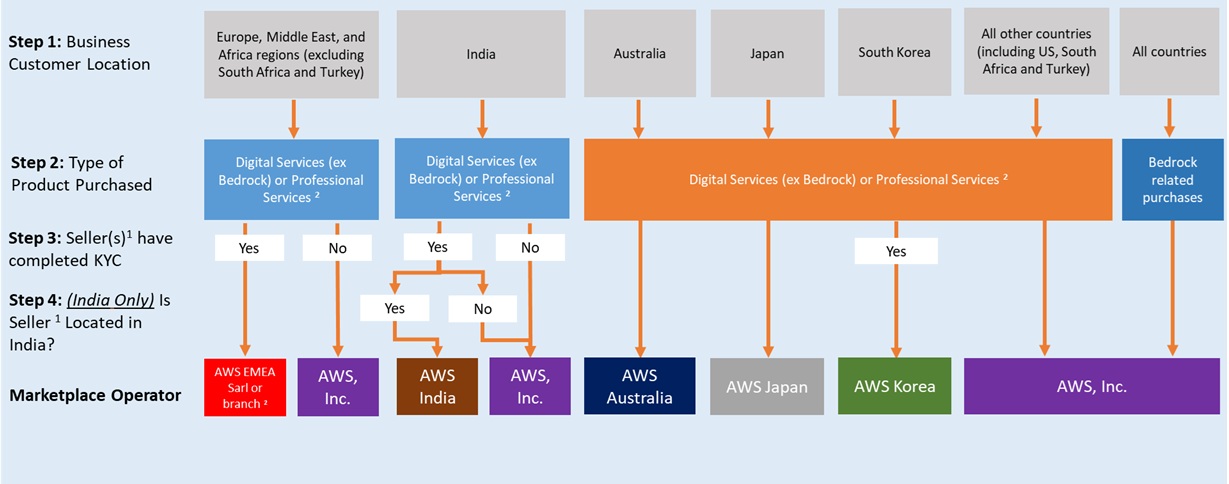
Fig. 1
Notes:
“Seller” refers to both ISVs and CPPO resellers for CPPO Marketplace transactions.
Professional Services referenced are delivered remotely.
Effective 02 February 2025: AWS EMEA Sàrl (Luxembourg) facilitates Professional Services purchases from sellers who have completed KYC.
AWS Marketplace Seller Tax Grid
The Seller Tax Grid provides detailed information about Marketplace tax logic, including operator determination and regional tax handling.
🚀 Learn More! AWS Seller Tax Grid
Factors That Determine Tax Treatment
Tax outcomes may vary based on:
Seller location
Buyer location
Product type (SaaS, AMI, container, services)
Transaction structure (B2B vs B2C)
AWS legal entity involved
Seller tax registrations
Summary
Taxes in AWS Marketplace may include:
Indirect taxes (VAT, GST, sales tax)
Seller income taxes
Withholding taxes
Taxes on AWS fees
Reverse charge obligations
In many cases, AWS — not the seller — is responsible for collecting and remitting indirect taxes.